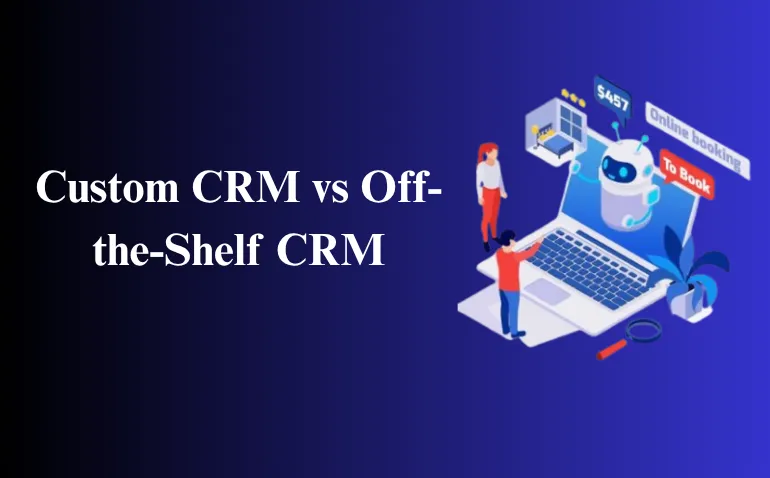
What Is an Off-the-Shelf CRM?
An off-the-shelf CRM (also known as ready-made CRM) is a pre-built software solution designed for general business needs. It comes with standard features that work for most industries out of the box.
Examples:
- Salesforce
- HubSpot CRM
- Zoho CRM
- Pipedrive
- Freshsales
These platforms are subscription-based and can be deployed quickly, making them a popular choice for small and mid-sized businesses.
Pros of Off-the-Shelf CRM
Quick Implementation Off-the-shelf CRMs are ready to use. You can sign up, set up your team, and start managing leads within hours.
Lower Upfront Cost Since you’re paying a subscription fee rather than funding development, the initial cost is much lower.
Regular Updates & Support Software vendors continuously improve their platforms with new features, bug fixes, and security patches.
Ease of Use These CRMs come with user-friendly interfaces, documentation, and training materials.
Integration with Popular Tools Most off-the-shelf CRMs easily connect with email, marketing, and analytics tools like Gmail, Mailchimp, and Google Analytics.
Cons of Off-the-Shelf CRM
Limited Customization You can only modify what the vendor allows — making it difficult to adapt the system to your unique business processes.
Feature Overload Many ready-made CRMs include features you’ll never use, which can clutter the interface and confuse users.
Recurring Subscription Costs Monthly or annual payments can add up over time, especially as your team grows.
Data Security Concerns Since your data is stored on third-party servers, sensitive information could be at risk if proper security measures aren’t in place.
Vendor Lock-In Migrating from one CRM to another can be time-consuming and costly.
What Is a Custom CRM?
A custom CRM is a tailor-made software solution built specifically for your business needs. Instead of relying on generic tools, it’s developed from the ground up to match your workflows, objectives, and data structures.
Custom CRMs are ideal for organizations with complex processes or unique industry requirements.
Pros of Custom CRM
- Built for Your Business Needs Every feature, dashboard, and workflow is designed around your company’s unique operations.
- Scalability and Flexibility As your business grows, new modules and functionalities can be added easily without being limited by vendor offerings.
- Enhanced Security You have full control over data storage, encryption, and access permissions.
- No Subscription Fees After the initial development cost, you own the software — no ongoing licensing fees.
- Seamless Integration A custom CRM can integrate perfectly with your internal tools, ERP systems, or APIs.
Cons of Custom CRM
- Higher Upfront Cost Building a CRM from scratch requires investment in development, design, and testing.
- Longer Time to Deploy Depending on the complexity, development can take several months before the CRM is ready for use.
- Maintenance Responsibility Since you own the software, you’ll need to handle updates, bug fixes, and server maintenance.
- Requires Technical Expertise You need an experienced software team or vendor who understands your business requirements.
When to Choose a Custom CRM
A custom CRM is ideal if:
- Your business has complex or unique workflows.
- Off-the-shelf solutions can’t meet your needs.
- You want complete data ownership and flexibility.
- You’re planning for long-term scalability and growth.
- You can allocate budget and time for custom development.
Example:
A logistics company with a unique delivery tracking process may require a CRM built to handle route optimization, driver performance, and customer feedback — all within one system.
When to Choose an Off-the-Shelf CRM
An off-the-shelf CRM is the better option if:
- You need a quick, cost-effective solution.
- Your business processes are fairly standard.
- You have a smaller team with limited IT resources.
- You want automatic updates and built-in integrations.
Example:
A startup that needs basic lead management and email automation can easily implement HubSpot or Zoho CRM without heavy investment.
Final Verdict: Which One Is Better?
- There’s no one-size-fits-all answer. The best CRM for your business depends on your goals, budget, and technical requirements.
- If you want speed, affordability, and simplicity, go for an off-the-shelf CRM.
- If you need custom workflows, full control, and scalability, a custom CRM is the better long-term investment.
- Ultimately, think of your CRM as a strategic tool — not just software. Choose the solution that aligns with your company’s growth vision and customer engagement strategy.